Aastik Verma
8 months ago




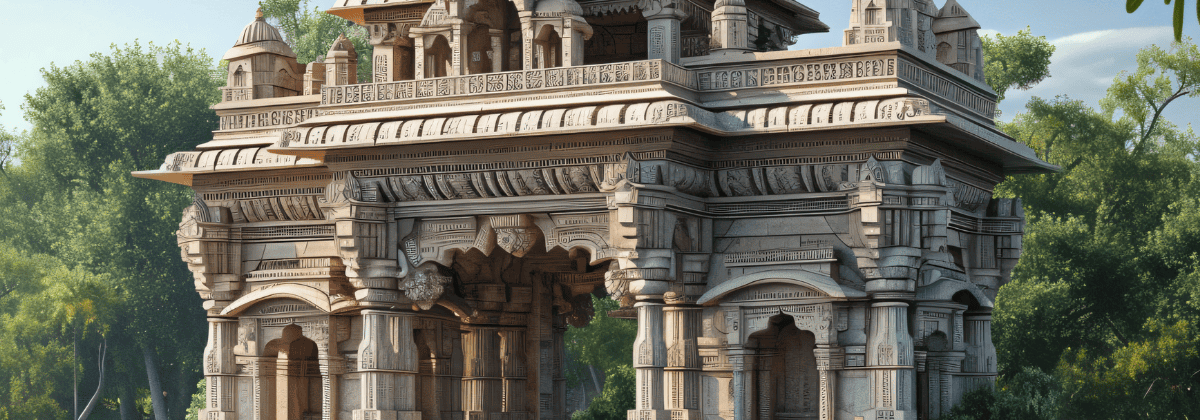
Religious buildings are more than places of worship; they are cultural landmarks, historical treasures, and masterpieces of architectural ingenuity. Sacred architecture embodies the beliefs, traditions, and values of different communities, reflecting their evolution through time. From the intricate carvings of ancient temples to the soaring domes of grand mosques and the awe-inspiring spires of gothic cathedrals, each structure tells a unique story.
Sacred architecture is a blend of spirituality, symbolism, and function. These buildings are designed to inspire awe, foster devotion, and provide a sense of connection between humans and the divine. The materials used, the layout, and even the smallest decorative elements carry deep religious significance.
Architects throughout history have meticulously planned these spaces to enhance spiritual experiences. Whether through the acoustics of a church for hymns and prayers, the geometric precision of Islamic architecture symbolising unity, or the towering vimanas of Hindu temples reaching towards the heavens, every detail has meaning.
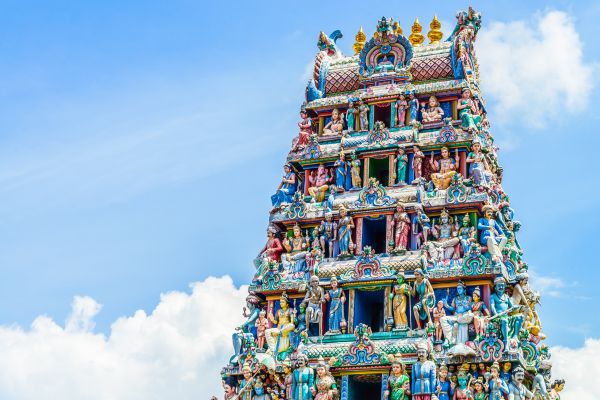
Hindu temple with a Dravidian-style gopuram (gateway tower), commonly seen in South India.
Temples have long stood as sacred places where the divine meets the earthly realm. They serve as centres of spiritual practice, cultural expression, and community gathering. Across different civilizations, temple architecture has evolved to reflect religious beliefs, societal structures, and artistic advancements. Whether constructed from intricately carved stone, vibrant wood, or towering brick structures, temples are testaments to human devotion and ingenuity.
Temples, especially in Hinduism and Buddhism, are not just places of worship but also centres of learning and community life. Ancient temples, such as those in India, Cambodia, and China, reflect a deep connection between religion, nature, and architecture.
One of the finest examples is the Angkor Wat in Cambodia. This vast temple complex showcases the intricate artistry of Khmer architecture, with detailed bas-reliefs depicting myths and celestial beings. In India, the Brihadeeswarar Temple in Tamil Nadu stands as a marvel of Dravidian architecture, built entirely from granite and featuring a towering vimana that symbolises spiritual ascent.
Hindu and Buddhist temples often follow the principles of Vastu Shastra or Feng Shui, ensuring harmony with natural elements. The temple layout is usually a mandala—a geometric representation of the universe. Every doorway, pillar, and sanctum aligns with cosmic energies, reinforcing the temple’s role as a conduit between the physical and spiritual realms.

Hâncu Monastery in Bursuc, Moldova.
Churches have long served as places of worship, community gathering, and architectural innovation. They stand as testaments to faith, endurance, and artistic expression, embodying the values and beliefs of Christian communities worldwide. From the grand cathedrals of Europe to the simple wooden chapels in rural areas, each church reflects its era’s architectural advancements and cultural influences. Whether through intricate stained-glass windows, towering spires, or acoustically refined interiors, churches create an atmosphere of reverence and spiritual connection.
Christianity’s sacred architecture has evolved dramatically over centuries, from the humble catacombs where early Christians worshipped in secrecy to the grand cathedrals of Europe that dominate skylines.
Gothic cathedrals, such as Notre-Dame de Paris and Cologne Cathedral, are known for their ribbed vaults, flying buttresses, and intricate stained-glass windows that depict biblical stories. These architectural innovations were designed not just for aesthetics but also to draw worshippers’ eyes heavenward, reinforcing a sense of divine presence.
Churches are filled with symbolism. The cruciform layout represents Christ’s sacrifice, while the altar serves as the focal point of devotion. High vaulted ceilings create an ethereal effect, making the space feel larger than life. The use of light, especially through stained glass, conveys spiritual illumination and divine grace.
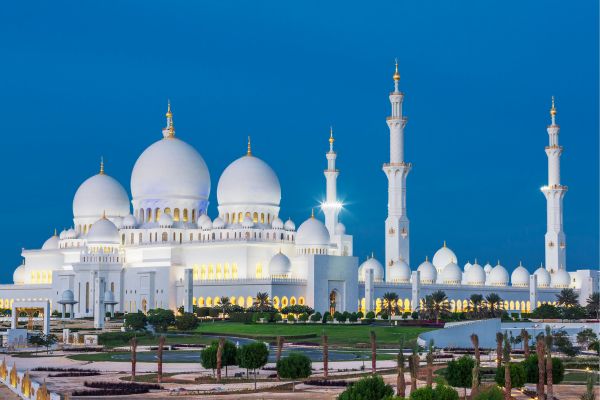
Sheikh Zayed Grand Mosque in the UAE
Mosques stand as powerful symbols of faith, embodying Islamic principles of unity, simplicity, and spirituality. Their architectural elements, including domes, minarets, and prayer halls, are designed to foster a deep sense of connection with the divine. Throughout history, mosques have evolved in form and function, serving not only as places of worship but also as centres for education, social gatherings, and cultural preservation. Whether adorned with intricate geometric patterns or elegantly minimalist, each mosque reflects the artistic and spiritual heritage of the community it serves.
Islamic architecture is a testament to the unity and simplicity of the faith. Mosques, from the Great Mosque of Córdoba in Spain to the Sheikh Zayed Grand Mosque in the UAE, feature a harmonious blend of form and function.
Unlike other religious buildings that use figurative imagery, mosques rely on Arabic calligraphy, geometric patterns, and arabesques to convey spirituality. These intricate designs symbolize the infinite nature of God and are often seen on domes, minarets, and mihrabs (prayer niches).
Mosques are not just places for prayer but also serve as community centres, schools, and even social hubs. Courtyards, fountains for ablution, and large prayer halls encourage congregation and reflection, reinforcing Islam’s emphasis on community and unity.
While traditional designs remain significant, modern sacred architecture incorporates contemporary materials and styles. Architects today blend cultural heritage with innovation to create sustainable and inclusive religious spaces.
For example, the Church of Light in Japan, designed by Tadao Ando, uses minimalist concrete structures to emphasise spirituality through light and shadow. Similarly, the Bait Ur Rouf Mosque in Bangladesh embraces natural ventilation and brickwork to merge modern sustainability with Islamic design principles.
Sacred architecture stands as a testament to human creativity, faith, and cultural evolution. Whether in the form of grand temples, majestic churches, or elegant mosques, these structures continue to inspire, unite, and shape societies.
At V-Trims Design, we honour the legacy of sacred architecture while embracing modern innovation. Our team specialises in designing religious spaces that blend tradition with contemporary aesthetics. Contact the best architecture firm in Lucknow today to bring your vision of a sacred space to life.